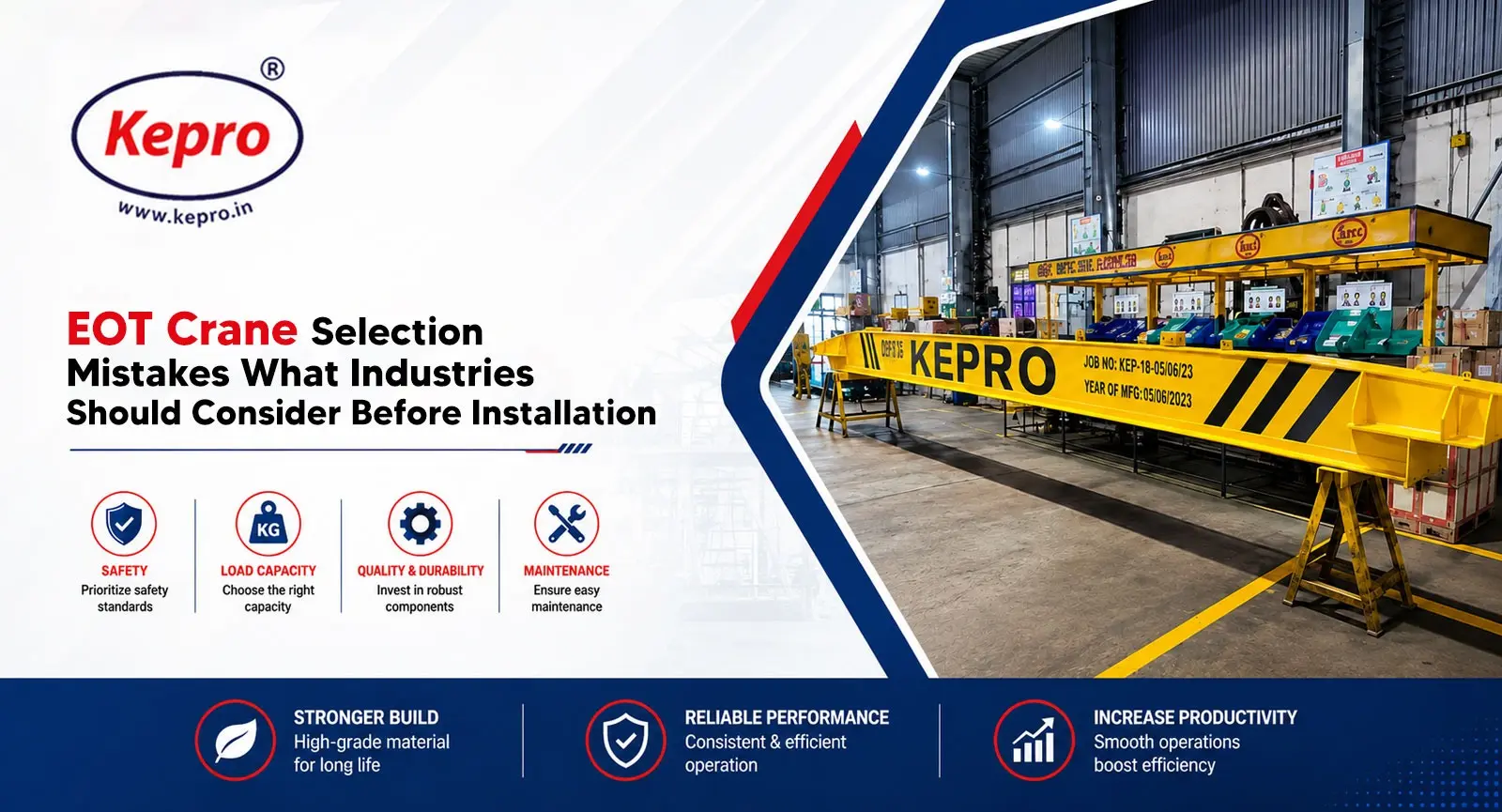

Overview – Most crane problems do not start with a manufacturing defect. They start much earlier, at the selection stage, when someone picks the wrong specification without realising it. An EOT crane chosen without proper thought about load, layout, and building structure often ends up needing costly modifications, or worse, causes safety issues down the line. This blog walks through the mistakes industries commonly make, so you can avoid them before installation rather than fixing them after.

Introduction

Selecting the right EOT crane is not just about matching a rated capacity to your heaviest load. Duty cycle, building constraints, future growth, and layout planning all play a part, and skipping any one of these often shows up as an expensive problem later. This blog goes through the mistakes that keep repeating across industries, in the hope that yours does not have to learn them the hard way.

Focusing Only on Maximum Capacity

This is genuinely one of the most common mistakes buyers make, and it happens more from habit than carelessness.

  • Many buyers look purely at maximum lifting capacity, say 5 tonnes or 10 tonnes, while completely ignoring the duty class the crane is actually rated for.
  • Duty class describes how frequently the crane will be used and under what average load, and this matters just as much as the peak figure printed on a spec sheet.
  • An EOT crane rated for occasional, light-duty use will wear out far faster than expected if it ends up running continuous, heavy cycles on a busy production floor.
  • The right approach is to evaluate operation frequency, average load, and work cycles together, not just the single maximum number that looks impressive on paper.

Getting the Load Measurement Wrong

Numbers that seem close enough on paper can cause real trouble once the crane is actually in use.

  • Estimating load weight without accurate measurement is surprisingly common, and even a modest underestimate can push a crane beyond its safe working limit during actual operation.
  • Lifting accessories, hooks, slings, and other EOT crane parts all add weight too, and this is often left out of the calculation entirely.
  • Indian industries in particular tend to grow over time, so selecting an EOT crane with slightly higher capacity than your current requirement can save you from a costly upgrade a few years down the line.
  • Some buyers select a higher capacity crane without checking whether the building can actually support it, which brings its own set of problems during installation.

Ignoring Building and Structural Limitations

A crane that looks perfect on the specification sheet is worthless if it simply does not fit your facility.

  • Submitting the building span as the crane span is one of the most common early specification errors, and it results in equipment that cannot be installed without structural modification.
  • Insufficient ceiling height limits the lifting stroke available, something that only becomes obvious once the crane is already on site and cannot be fixed easily.
  • Confirming the runway rail centreline distance, not just the general building width, is a step that gets skipped surprisingly often, and it causes real installation delays.
  • Proper structural evaluation before ordering prevents most of these headaches, and it costs far less than fixing a mismatch after the equipment has already arrived.

Choosing the Wrong Crane Type and Layout

Not every overhead lifting job needs the same configuration, yet many buyers default to a standard setup without asking the right questions first.

  • Single girder and double girder designs suit different applications, and defaulting to a standard configuration without proper analysis can leave you with equipment that is either overbuilt or genuinely inadequate.
  • Top running and underslung systems also serve different needs, depending on your ceiling height, building structure, and how the crane needs to move through the facility.
  • Many facilities plan crane installation as an afterthought, without integrating it into the actual production layout, which leads to dead zones where loads simply cannot reach.
  • A well-matched EOT crane layout, planned alongside your production flow rather than added on afterward, genuinely improves efficiency across daily operations.

Picking a Manufacturer on Price Alone

The cheapest quote rarely turns out to be the cheapest choice once the crane is actually running.

  • Buyers who focus purely on purchase price, while ignoring what happens after installation, often end up paying more in the long run through poor support and frequent breakdowns.
  • A reliable EOT crane manufacturer should be able to customise configurations to your specific operational needs, rather than pushing a limited range of standard models.
  • Ask about installation experience across different industries. A manufacturer with a track record in steel, cement, automotive, or port applications brings genuinely useful, proven expertise.
  • Client references, case studies, and site visits are all fair requests to make before signing a contract, and a confident manufacturer will not hesitate to provide them.

Where Kepro India Fits Into This

Kepro India manufactures a range of EOT crane models built around proper duty class matching, structural compatibility, and layout planning, rather than a one-size-fits-all approach. If you are in the early stages of specifying a crane for your facility, sharing your load, building, and production details with their team can help avoid the mistakes covered in this blog. Their range can be seen at https://www.keproindia.com/eot-crane/, and the team is available to guide you through proper selection.

Frequently Asked Questions

Focusing only on maximum lifting capacity while ignoring duty class is one of the most frequent mistakes. A crane rated for occasional use wears out much faster than expected if it ends up running frequent, heavy cycles.
Ceiling height, runway rail distance, and available span all directly affect whether a chosen crane can actually be installed without costly modification. Skipping proper structural evaluation is one of the most avoidable causes of installation delays.
Both matter. Selecting slightly above your current requirement is generally wise, since many industries grow over time, and upgrading capacity later is far more expensive than specifying correctly from the start.
Very important. Poor support after installation can lead to frequent breakdowns and higher long term costs, even if the initial purchase price looked attractive. A manufacturer’s track record and willingness to provide references say a lot about what to expect.

Kepro

Kepro Technologies Pvt. Ltd. is a leading Indian manufacturer of lifting equipment. We have been providing innovative solutions across industries like construction, railways, and oil & gas since 1993.

Related Posts