Lifting operations depend on one component more than most people realise: the sling
connecting the load to the crane. Get that choice right, and the lift goes smoothly every time. Get it wrong, and
the cost shows up later, in damaged surfaces, slings that wear out too soon, or rigging that simply does not suit
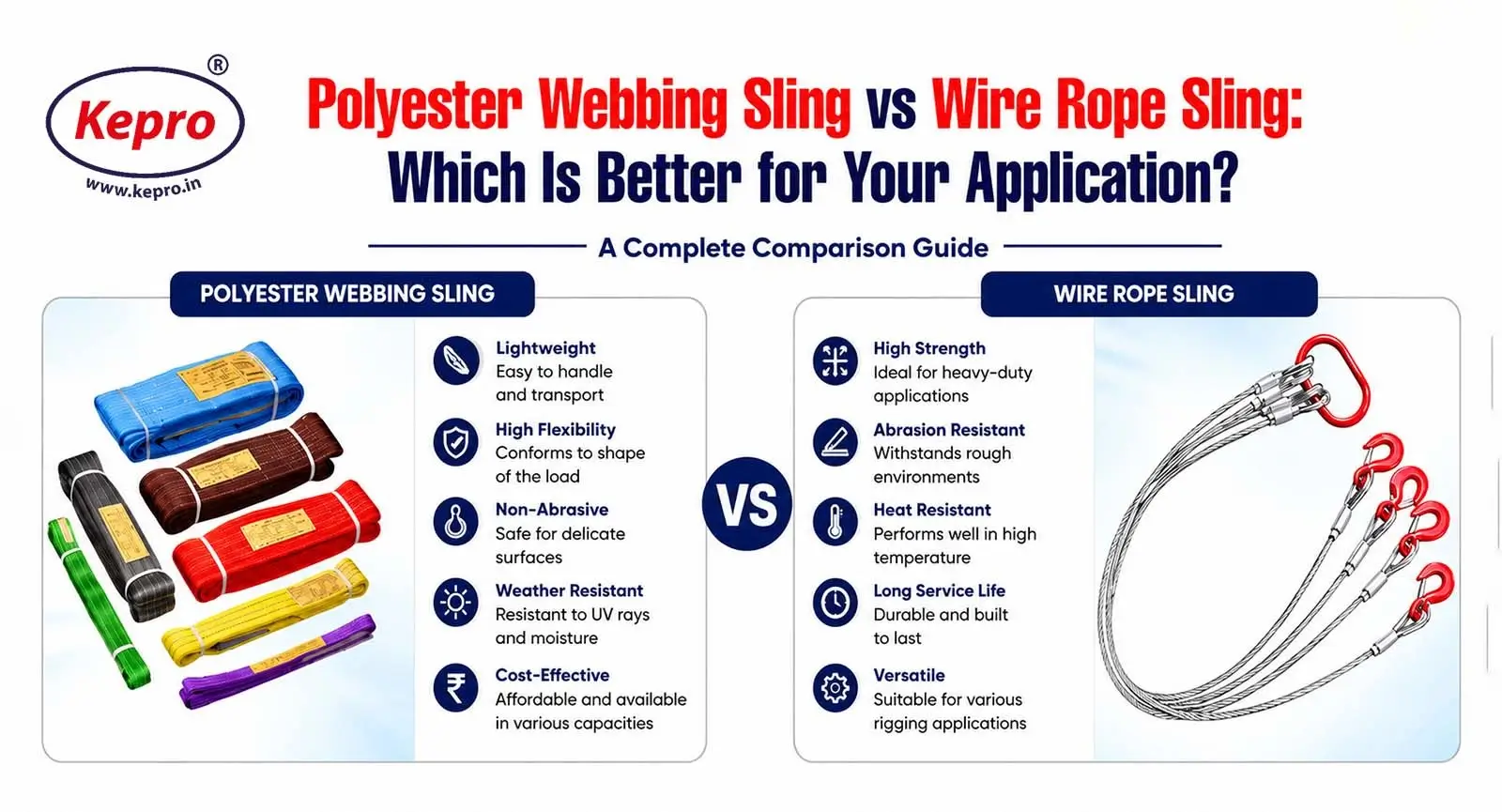
the load. The two most common options are a polyester webbing sling and a wire rope sling. Both serve the same basic
function, but the similarities end there. One is soft, light, and protective. The other is rigid, heavy, and built
to withstand harsh conditions. Choosing between them is not about finding the better product; it is about matching
the sling to the application. This article compares both the slings, with specifications and the practical
considerations that matter, whether you are sourcing directly or comparing options from polyester webbing
sling manufacturers.
The Basic Difference Between these Webbing Slings
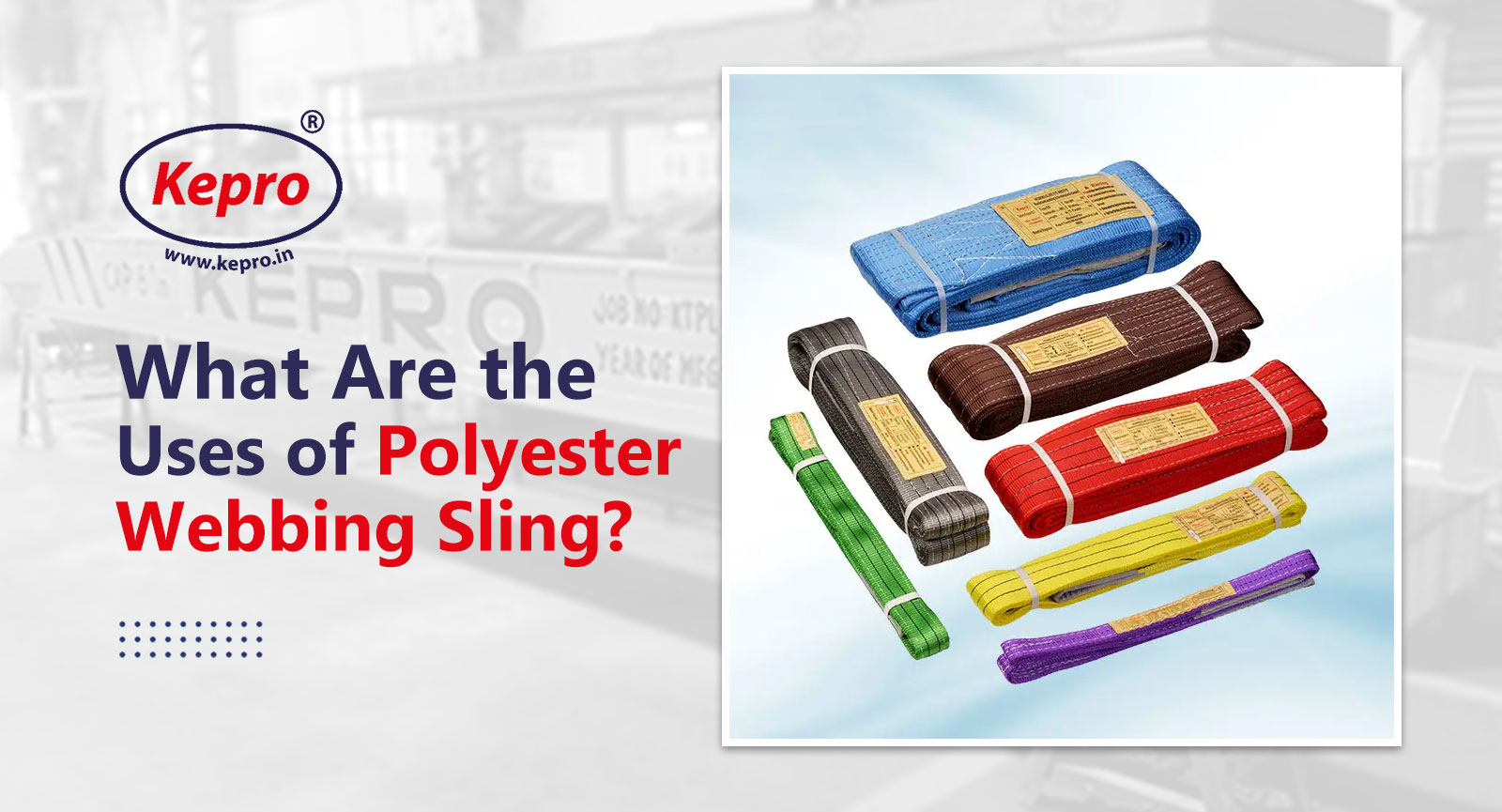
Polyester Webbing Slings
Flat, woven straps made from high-tenacity polyester yarn. Soft enough to bend around
almost anything, light enough to carry several at once without strain. They come in flat and round (endless) forms,
with capacity and safety factor printed right on the label.
Wire Rope Slings
Steel wires twisted into strands, then twisted again into rope. Heavy and rigid, built
for work where the priority is strength and the ability to take a beating, not gentle handling.
Polyester protects and bends, whereas steel survives and endures. Everything else
follows from there
When to Use a Polyester Webbing Sling
Heat Is Part of the Work:
Polyester starts losing strength as it approaches 100°C. In a foundry, steel mill, or
anywhere temperature gets high regularly, polyester simply is not an option. Wire rope handles much higher heat with
far less impact on its rated strength.
Durable on Rough Surfaces:
Sharp edges, rough cast surfaces, anything that would slice into webbing, wire rope
takes this kind of contact far better. Even wire rope benefits from edge protection on genuinely sharp loads, but it
survives where webbing would not.
Heavy-Duty Lifting:
Steel coils, large fabricated components, structural steel, loads that are both heavy
and constant. In this kind of continuous industrial use, wire rope tends to outlast webbing, especially where
surface protection is not part of the equation.
Who Actually Uses Each One
Polyester webbing slings show up constantly in:
- Automotive assembly lines and parts
handling - Furniture and appliance
manufacturing - Glass and panel handling
- General warehousing and
logistics - Aerospace component handling where the
finish cannot be touched
Wire rope slings are the default in:
- Steel and metal fabrication
- Shipyards and marine
construction - Foundries and high-heat
processing - Heavy construction and structural steel
work - Mining and quarry operations
The global lifting equipment market, slings included, passed USD 9 billion in 2023.
Synthetic slings are taking a growing share of that, mostly because manufacturing sectors increasingly need lighter,
surface-safe lifting that does not damage what it is lifting.
Tips to Consider Before You Buy
The following are the tips one should consider before making a decision to buy
one:
- Check the label: Every sling
needs a visible tag showing capacity, safety factor, and where it came from.
- Check the manufacturer:
Established polyester webbing sling manufacturers test to recognised standards, and will hand over certificates
without any problem.
- Think about storage: Polyester
needs to stay dry and out of direct sun; wire rope needs lubrication and dry storage to avoid rust.
More slings fail because of poor storage or a missed inspection than because the
material itself was wrong for the work.
Conclusion
There is no better option between a polyester webbing sling and a wire rope sling;
there is only the right one for what you are lifting, where, and how often. If the surface matters, if the shape is
uneven, or if the budget needs to stretch across moderate loads, a webbing sling is the practical choice for most
standard lifting work. If heat, sharp edges, or constant heavy industrial use define the work, wire rope earns its
place. Either way, work with polyester webbing sling manufacturers or wire rope suppliers who give you proper
certification, clear labelling, and answer questions without making it complicated. Companies like Kepro India help businesses choose safe, high-quality lifting solutions that match their operational
requirements without unnecessary complexity.
FAQ’s