

Introduction
A chain sling looks like a fairly simple product, a length of chain with a master link at the top and hooks at the bottom, but the manufacturer behind it decides a lot more than most buyers realize. Two slings that look identical on the outside can differ in the actual steel grade used, how consistently the welds were made, and whether the load rating was genuinely tested or just estimated. These seven factors help you tell a reliable manufacturer apart from one that only looks reliable on paper.
1. Compliance With IS 2760 and Testing Standards
Every genuine Chain Sling manufactured in India should conform to IS 2760, the Indian Standard covering steel chain slings.
A manufacturer following this standard tests slings properly rather than relying on the chain’s general reputation, and the standard also sets out how working load limits should be calculated and marked. Ask directly whether the manufacturer’s slings are made to IS 2760, and be cautious of anyone who is vague about which standard, if any, they actually follow.
2. Range of Chain Sling Grades and Types Offered
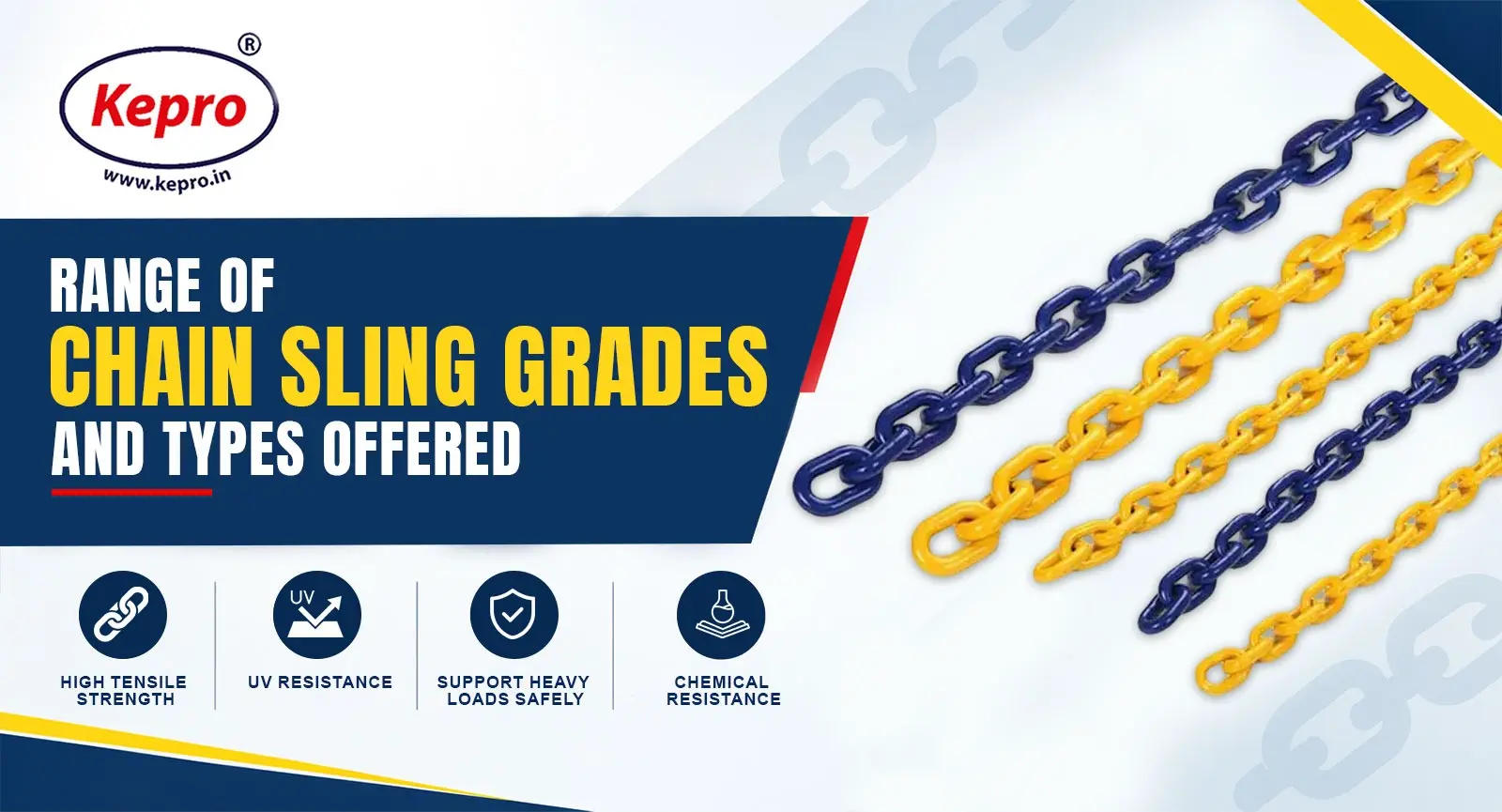
The grade of steel used in a chain sling decides how much load it can safely carry for a given chain diameter, so a manufacturer who only offers one grade limits your options unnecessarily.
Carbon steel chains, usually Grade 30, 40, or 70, are not meant for overhead lifting and rigging and are more suited to tying down or bundling loads. Alloy steel chains, commonly Grade 80 or Grade 100, are what should be used for overhead lifting, and a Grade 100 chain generally lets you use a thinner, lighter chain for the same working load as a thicker Grade 80 chain. A manufacturer offering single-leg, double-leg, and multi-leg configurations across these grades gives you more flexibility to match the sling to the actual job rather than working around whatever happens to be in stock.
3. Understanding of Your Load and Application
Choosing well among chain sling manufacturers in India starts with the manufacturer actually asking about your load, not just your budget.
Before recommending a sling, a manufacturer worth working with should ask about the shape, size, and weight of what you are lifting, along with where the load’s center of gravity sits, since this affects how many legs the sling needs and how it should be rigged. If a supplier quotes a sling without asking any of these questions, there is a real chance the recommendation is based on guesswork rather than your actual requirement.
4. Manufacturing Quality and Traceability
The physical build of a chain sling, the weld quality, the master link rating, and the hooks fitted at the end decide how reliably it performs over years of repeated use.
Ask whether the manufacturer can trace each batch of chain back to its raw material source, since this traceability matters if a defect is ever found and needs to be tracked to its origin. Consistent link size, a smooth and fully closed weld at each joint, and hooks rated to match the chain are all signs of a manufacturer paying attention to the details that actually matter, rather than just producing chain that looks acceptable on the surface.
5. Temperature and Working Environment
A chain sling used in a hot environment, such as near a furnace or in a foundry, behaves differently from one used at normal shop floor temperature, and a good manufacturer should be upfront about this.
Alloy steel chain slings can generally be used at temperatures up to around 1000°F, but continuous exposure above roughly 400°F affects their strength over time, and manufacturers typically recommend reducing the working load limit in these conditions. A manufacturer who volunteers this information, rather than waiting for you to ask, is generally more trustworthy about the actual limits of what they are selling you.
6. Proof Load Certification and Documentation
A chain sling without proper documentation is difficult to trust, no matter how good it looks, since the working load limit is only meaningful if it has actually been verified through testing.
Every sling should come with an identification tag showing the serial number, manufacturer details, size, grade, and working load limit, and this tag should be clearly legible. A proof load test certificate from a recognized test house should also be available for the specific batch you are buying, not a generic document reused across different orders. A manufacturer who provides this without hesitation is a safer choice than one who treats the request as an inconvenience.
7. After-Sales Support and Inspection Guidance
A chain sling needs regular inspection throughout its working life, and a manufacturer who disappears after the sale leaves you without much support when questions come up later.
Ask whether the manufacturer offers guidance on inspection frequency, what to look for during a visual check, such as stretched links, cracks near welds, or bent hooks, and how often a formal periodic inspection should be carried out based on how heavily the sling is used. A manufacturer who can also help replace damaged components, like a hook or a shortening clutch, without needing to replace the entire sling, adds real long-term value beyond the initial sale.
Talk to Kepro Technologies About Your Requirement
Kepro Technologies Pvt. Ltd., based in Kolkata, West Bengal, manufactures and stocks chain sling units from 1 to 4 legs, in polished, black, and galvanized alloy steel, with a safety factor of 4:1 and capacities up to 20 tonnes and chain diameters up to 32 mm. As one of the established Chain Sling Manufacturers in India, the team can help you work out the right grade, configuration, and capacity for your specific lifting requirement.
Frequently Asked Questions

Kepro
Kepro Technologies Pvt. Ltd. is a leading Indian manufacturer of lifting equipment. We have been providing innovative solutions across industries like construction, railways, and oil & gas since 1993.
Related Posts
April 22, 2026
Chain Sling Inspection Checklist: A Complete Safety Guide to Prevent Lifting Failures
On most work sites, chain slings are treated like a basic tool. People hook them…
July 25, 2025
Expert Tips for Choosing the Right Chain Sling for Rigging Operations
Chain sling is an essential part of the construction, manufacturing, and rigging industries. This sturdy…
June 20, 2025
How to Ensure Safe Use of Chain Slings in Construction Projects
The chain sling plays an essential role in the rigging industry. It can be described…
March 25, 2025
Maximize Safety and Efficiency with the Proper Use of Chain Slings
In industries, where load lifting is a common task, it is essential to priortize safety…