

Introduction
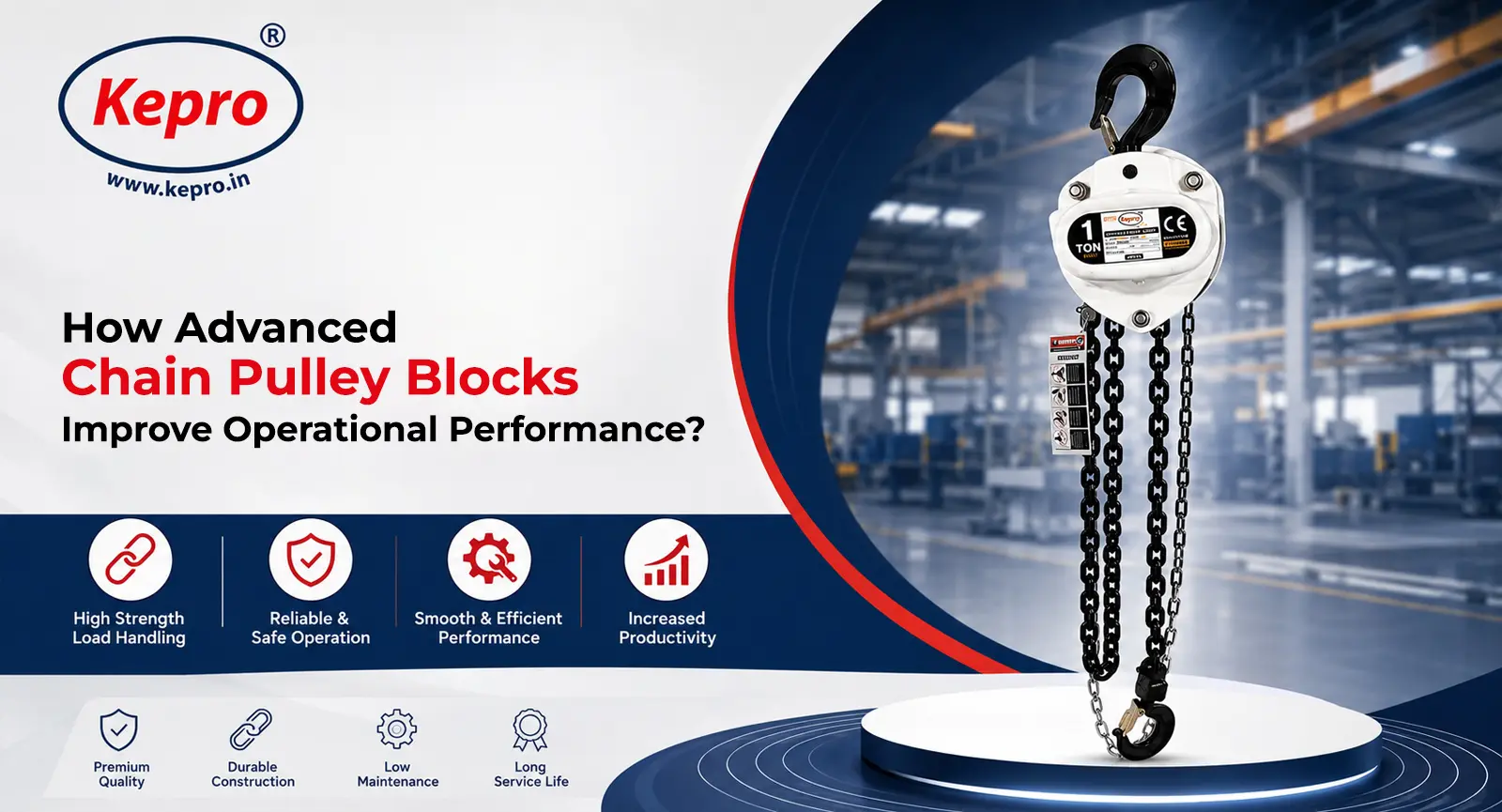
Manual lifting equipment gets used hard. Day shifts, night shifts, heavy loads, awkward lifts, demanding environments. A chain pulley block that performs well in those conditions is not an accident — it is the result of specific design decisions that better-engineered blocks get right and cheaper alternatives cut corners on. Understanding what those decisions are helps you specify the right block for the job and avoid the ones that will cost you more in the long run.
What Separates an Advanced Chain Pulley Block From a Standard One?
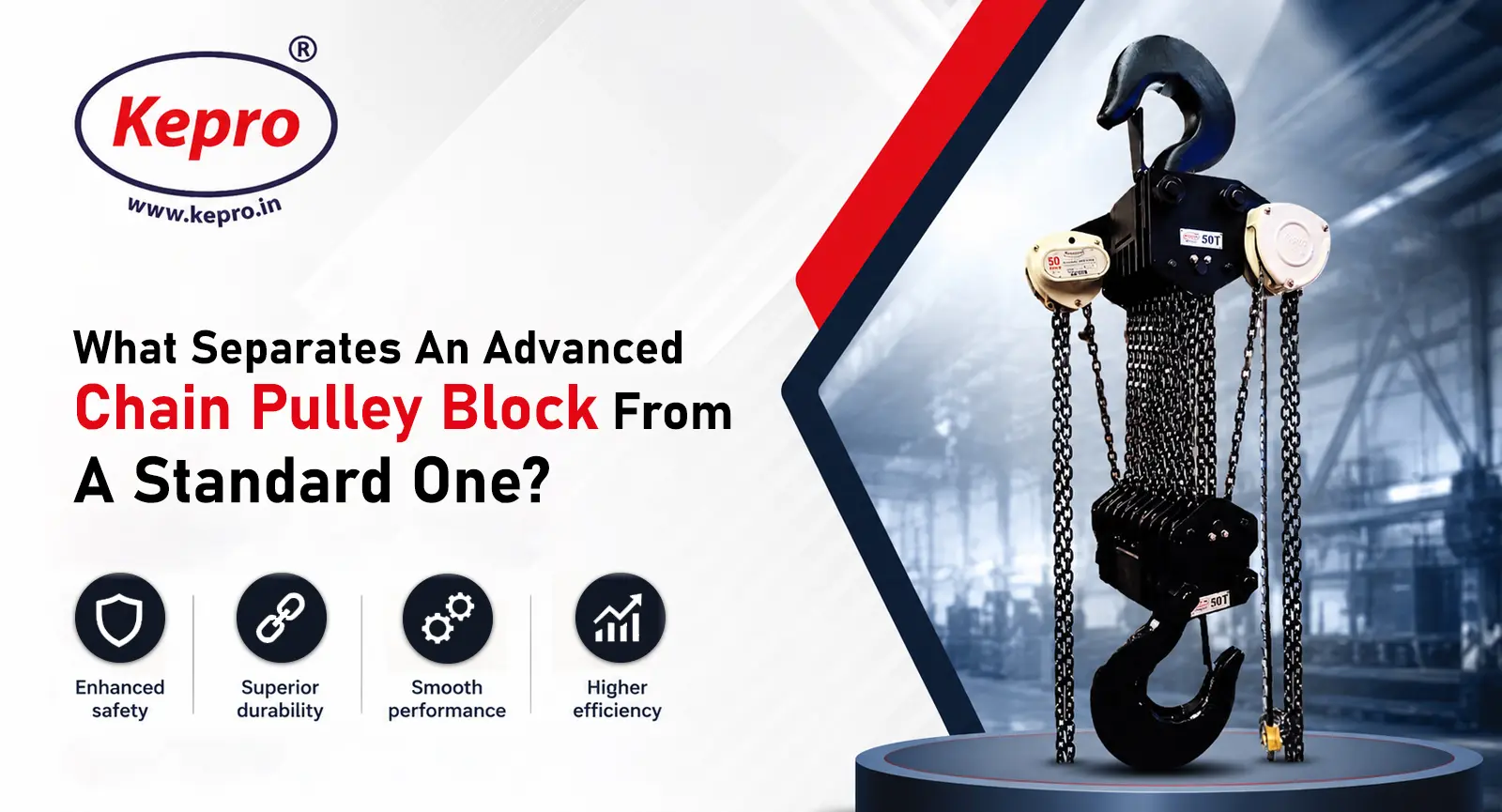
The core function of a chain pulley block is straightforward — it multiplies the pulling force applied to the hand chain to lift a load through a gear reduction mechanism.To understand this mechanism in detail, read our guide on Chain Pulley Block Working.
Three things determine that reliability in practice. The quality of the load chain and its grade rating, the precision of the gear mechanism and load brake, and the safety features built into the block to protect against operator error and overloading. Each of these directly affects operational performance, and each is where corners get cut on cheaper equipment.
Key Design Features That Improve Operational Performance
Load chain grade.
The load chain is the most loaded component in the block. Grade 80 alloy steel chain is the standard for quality blocks, conforming to BS EN 818-2. It provides the tensile strength needed to handle rated loads with an appropriate safety factor, and the wear resistance to maintain that strength over a long service life. Lower-grade chains wear faster, stretch sooner, and reduce the usable life of the whole block.
Precision gear mechanism.
The gear train transfers hand chain effort into lifting force. A well-machined gear set runs smoothly, requires less pulling effort for a given load, and maintains consistent mechanical advantage across the full range of travel. Poor tolerances mean jerky operation, higher hand chain pull force than the capacity should require, and accelerated wear on the gear teeth.
Mechanical load brake.
The brake is what holds the load when the operator stops pulling. It engages automatically when lifting force is released and holds the load at any position. A reliable brake holds without creeping under sustained load. A poor one drifts, which is both operationally inconvenient and unsafe.
Overload protection.
Kepro’s chain pulley blocks include a friction slip clutch that prevents the block from lifting beyond its rated capacity. When an overloaded lift is attempted, the clutch disengages. The hand chain keeps moving but the load chain does not. The load stays where it is. This protects the gear mechanism, the load chain, and the hook from damage caused by overloading — and protects the people working under the load.
Ergonomic design.
A block that is easy to operate reduces operator fatigue over a full shift. Kepro’s design philosophy specifically addresses this — the ergonomic design allows for easy manual operation, reducing strain and fatigue. In high-frequency lifting applications, that reduction in effort adds up across a working day.
The Kepro Range
Kepro India manufactures chain pulley blocks across multiple series, each designed for specific operational requirements:
- Plus Series — general-purpose industrial use, built for reliability across standard lifting applications
- Tauro and Taurus Series — heavy-duty variants for demanding environments and higher-frequency use
- 360 Kepflex Series — hand chain guide rotates a full 360 degrees for operation in confined spaces where standard blocks cannot be operated from a fixed position
- Hurricane Series — designed for demanding site conditions
- Star Series — CE-marked for international compliance requirements
- Non-Spark Series — for use in hazardous areas with flammable gas or dust
- HSZC Series — for specific industrial and lifting configurations
- Orpek and Liftmaster Series — additional capacity and configuration options
Capacity goes up to 100 ton across the range, covering everything from lighter maintenance work to the heaviest industrial lifting requirements.
Industries and Applications
- Kepro chain pulley blocks can be used in a wide variety of industrial and commercial applications:
- Construction and manufacturing – lifting structural elements, machinery and heavy assemblies
- Warehousing and logistics — load placement and handling in warehouses
- Maintenance and repairs – lifting equipment for servicing in workshops and on site
- Car workshops – Engine removal, gearbox work and component handling
- Agriculture and farming – installation and lifting of equipment in a rural environment
- Event and stage rigging — Entertainment and event load suspension
Contact For Supply
Kepro India is one of the leading chain pulley block manufacturers in India, with locations in Kolkata, Haridwar, Delhi, Ahmedabad, and Chennai. The range covers standard, heavy-duty, confined-space, non-spark, and CE-certified variants across capacities up to 100 ton. To discuss your requirement or get a quote, contact Kepro at +91 9163616163 or anirudh@kepro.in.
Frequently Asked Questions

Kepro
Kepro Technologies Pvt. Ltd. is a leading Indian manufacturer of lifting equipment. We have been providing innovative solutions across industries like construction, railways, and oil & gas since 1993.
Related Posts
May 22, 2026
5 Important Features to Check Before Buying a Chain Pulley Block
Picking the right chain pulley block is not something you want to rush. These tools…
January 28, 2026
A Simple Guide to Chain Pulley Block Types, Parts, & Working
A chain pulley block is a simple lifting tool that helps move heavy items safely…
November 24, 2025
Understanding Chain Pulley Block Parts Name: A Breakdown for the Beginners
A chain pulley block is a manual lifting device that is used alongside gears and…
October 16, 2025
A Guide to Chain Pulley Block Working and Its Types
In this blog, you will be gaining knowledge about a chain pulley block working and…