

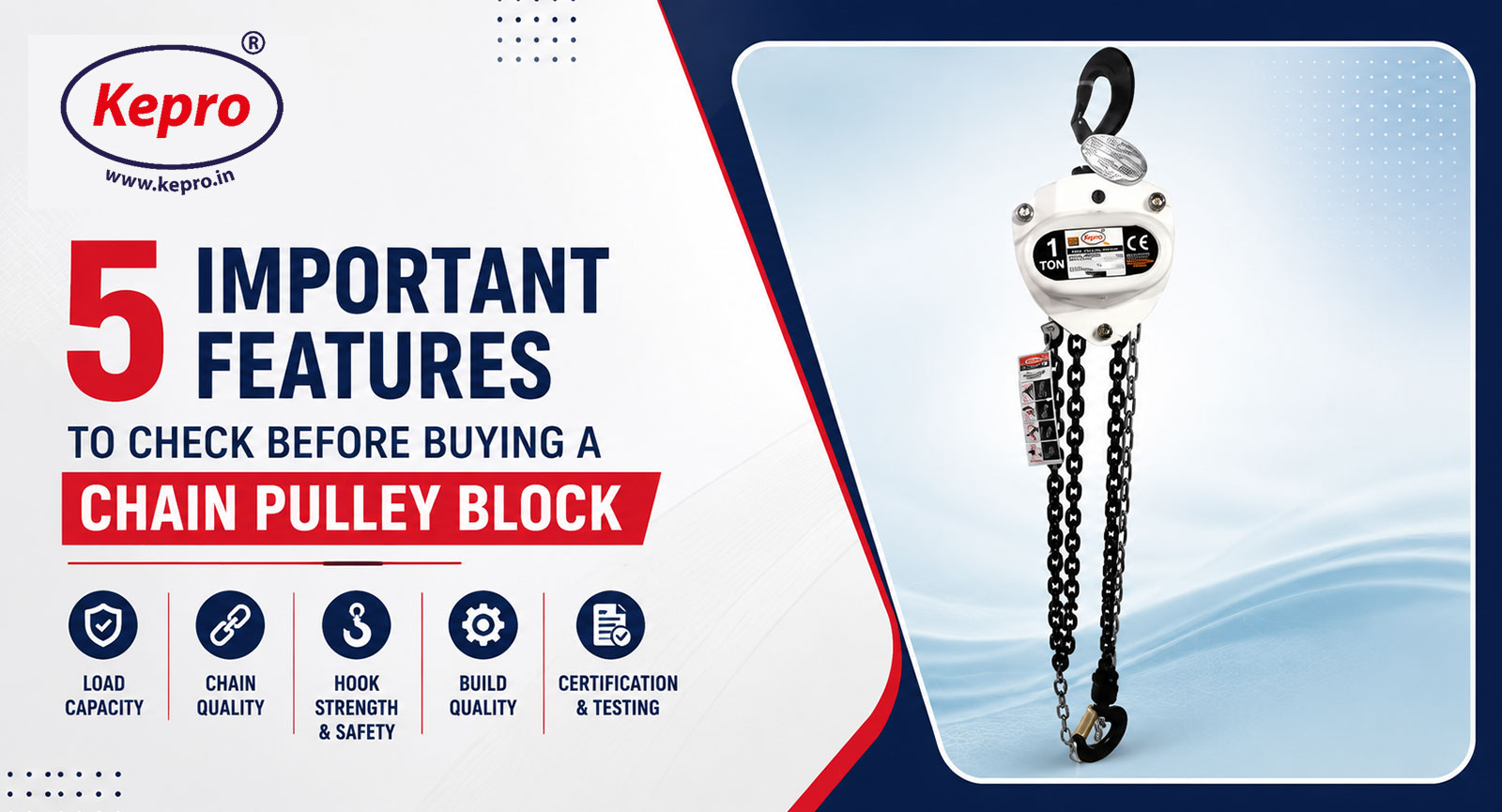
Picking the right chain pulley block is not something you want to rush. These tools handle heavy loads every single day, and if you buy the wrong one, you will know about it either through poor performance or a safety issue in the workplace. There are many options available in the market. Some are strong and reliable, while others may look good but do not perform well during heavy-duty work. You cannot always judge the quality just by seeing the product photo or comparing prices. Knowing what to actually look for makes the whole buying process much easier. Here are the five features that matter most:
1. Load Capacity
Load capacity is the first thing to check. This number tells you the maximum weight the chain pulley block can safely handle, and it is usually shown in tons on the product label or spec sheet. Most people try to match the capacity exactly to their load. That sounds logical, but it is actually the wrong approach. Always pick a block with a higher capacity than your actual load. If you are lifting loads of 2 tons, buy a 3-ton block. That extra capacity gives you a proper safety buffer and reduces the stress on the equipment during every lift. Here is a simple guide to help:
- Under 1 ton– Light workshop and maintenance tasks
- 1 to 3 tons– Automotive repairs and general industrial work
- 3 tons and above– Heavy construction, large machinery, and demanding site work
Running a block at its maximum limit regularly wears it down faster than it should and makes it less reliable over time.
2. Chain Quality
Most people buying a chain pulley block spend all their time looking at the outer body. They check how solid it feels, how heavy it is, and whether the hooks look sturdy. The chain barely gets a second look. That is actually where a lot of buyers go wrong. The chain is the part holding the entire load every single time you use the tool. If it is not up to the requirements, nothing else about the block really matters. For lifting and pulling work, stick to these:
- Grade 80 alloy steel- Solid, dependable, and used across workshops and industrial sites worldwide.
- Grade 100 alloy steel- Stronger than Grade 80 and better suited for heavier, more demanding work
If you are looking at a product and cannot find the chain grade mentioned anywhere, just move on. Manufacturers who use quality chains always mention it. Those who do not mention it usually have a reason for staying quiet about it.
3. Gear Ratio
Gear ratio is one of those things that barely gets a look when people are shopping for a chain pulley block. Most buyers check the weight limit, maybe look at the build, and move on. The gear ratio just does not seem that important until you are actually using the tool every day and realise something feels off. It decides how much effort is needed and how far the load moves during pulling. The two types of gear ratios are:
- Higher gear ratio– Your arms do less work on each pull, but the chain has to travel further to move the load the same distance
- Lower gear ratio– The load moves more quickly, and the chain covers less distance, but you are physically working harder to make each pull happen
One is not better than the other across the board. It genuinely depends on the work you do.
4. Build Quality of the Body and Hooks
The housing protects all the internal gears and moving parts inside the block. If the housing is weak, it cracks under pressure or lets in dust and moisture, both of which damage the tool from the inside out. Good chain pulley blocks are built with:
- Drop-forged steel or cast iron housing that handles daily impact without giving way
- Drop-forged steel hooks at the top and bottom for strength you can rely on
- Swivel hooks that rotate freely so you can rig from different angles without creating awkward stress on the connection
- Safety latches on both hooks that stay firmly locked under load
Run your hand over the body and test the hooks before buying if you can. A solidly built block feels noticeably different from a cheap one. Trust that feeling.
5. Safety Features
The most important safety feature on any chain pulley block is the load brake. This keeps the load held safely in place the moment you stop pulling. Without it, any release of tension could send the load dropping, and that is a serious risk in any working environment. Beyond the load brake, look for these additional safety features:
- Overload protection that cuts out before internal parts get damaged
- Anti-reverse ratchet systems that stop the load from travelling backwards accidentally
- Secure safety latches that do not pop open under stress
These features are not extras reserved for high-end models. Any chain pulley block worth buying for professional use should include them as standard.
Conclusion
A good Chain Pulley Block should make lifting work feel safer, smoother, and less stressful during daily operations. That is why checking the quality, strength, and ease of use before buying is always worth the effort. The right equipment can help avoid frequent repair problems and make handling heavy loads much easier for workers. Many industries prefer trusted companies like Kepro India because reliable equipment usually performs better for a longer time and supports smooth working conditions every day.

Kepro
Kepro Technologies Pvt. Ltd. is a leading Indian manufacturer of lifting equipment. We have been providing innovative solutions across industries like construction, railways, and oil & gas since 1993.
Related Posts
July 31, 2026
How Advanced Chain Pulley Blocks Improve Operational Performance?
Overview – A chain pulley block is one of those tools that most industrial operations…
January 28, 2026
A Simple Guide to Chain Pulley Block Types, Parts, & Working
A chain pulley block is a simple lifting tool that helps move heavy items safely…
November 24, 2025
Understanding Chain Pulley Block Parts Name: A Breakdown for the Beginners
A chain pulley block is a manual lifting device that is used alongside gears and…
October 16, 2025
A Guide to Chain Pulley Block Working and Its Types
In this blog, you will be gaining knowledge about a chain pulley block working and…